
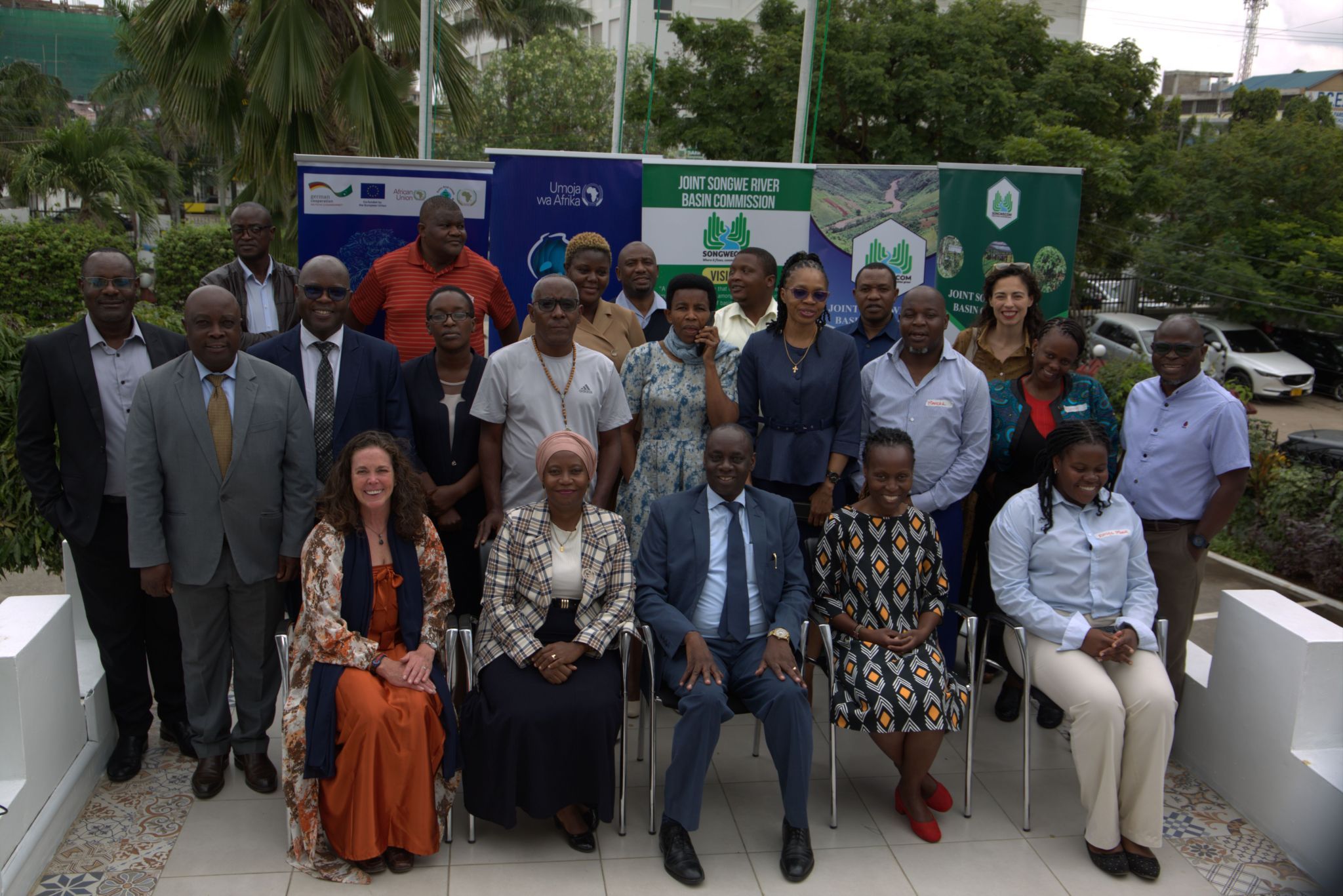
The Songwe River Basin is strengthening its capacity to translate climate-resilient water investment priorities into bankable projects capable of attracting financing. A regional “Capacity Development Training on Climate-Resilient Water Investment Programming and Preparation of Pipeline Projects for the Songwe River Basin,” which took place from 22 to 26 June 2026 in Dar es Salaam, United Republic of Tanzania, brought together the Joint Songwe River Basin Commission (SONGWECOM) and representatives from its Member States to strengthen skills in climate-resilient water investment programming, project preparation and financing.
The training, developed under the Continental Africa Water Investment Programme (AIP) and facilitated by AIP experts Dr Judith Maryna Storie and Dr Catarina Fonesca, with guest speaker Dr Victor Kongo from GWP Tanzania, focused on the transition from planning to investment mobilisation. Participants explored practical approaches to developing investment programmes, improving project bankability and identifying financing strategies that can support implementation.
Practical sessions addressed project budgeting and financial structuring, including approaches for estimating capital and operational expenditure over indicative implementation periods. Participants also examined how project components can be matched with appropriate sources of finance and considered the potential of blended finance to reduce reliance on grant-based financing.
The training also emphasised the importance of integrating environmental and social safeguards, environmental, social and governance considerations, grievance redress mechanisms, gender equality and social inclusion, youth, and relevant faith and spiritual considerations into project design from the outset. These measures are important for identifying and managing risks and strengthening investor confidence.
The Blue Green Songwe Initiative and the Songwe Climate Investment Information System were identified as important starting points for advancing strategic investments in climate adaptation, water security and sustainable development. Participants further highlighted the need for a basin Water Investment Programme, stronger data and evidence systems, and closer alignment between technical planning and financing strategies.
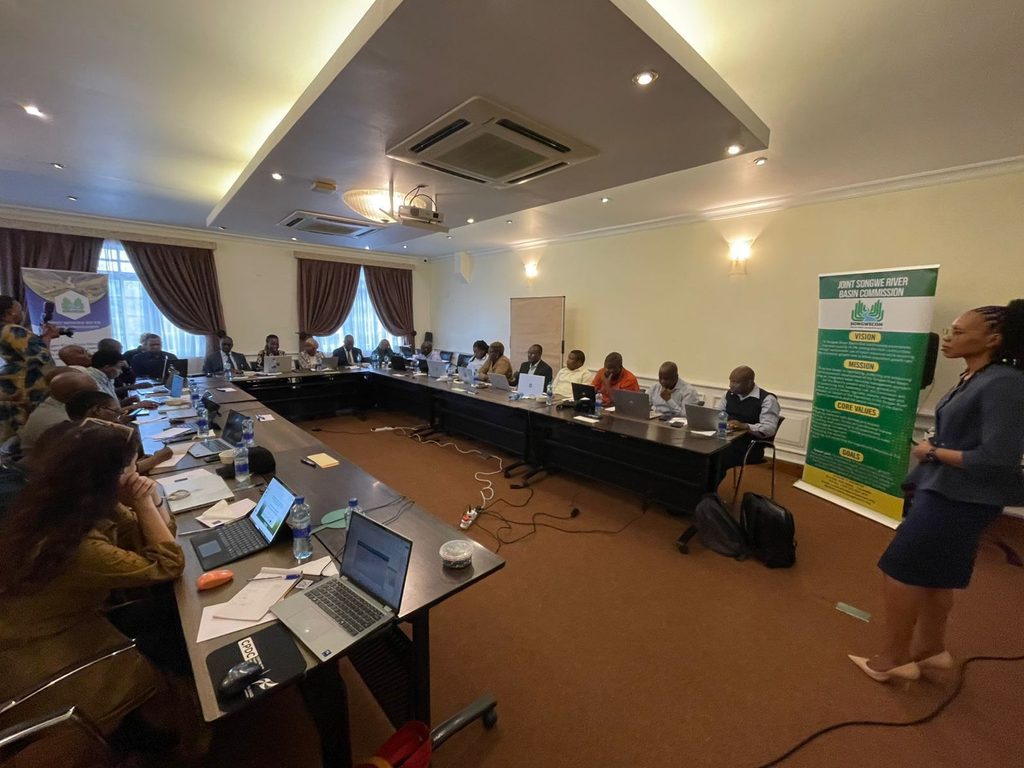
The training underscored that successful climate finance mobilisation requires more than a pipeline of project concepts. It requires sustained institutional commitment, strategic partnerships, dedicated expertise and a coordinated approach to developing and tracking an investment portfolio.
The training achieved the following:
- It kickstarted the process of considering a Basin Water Investment Plan (WIP) emanating from a 12-year hiatus of the Songwecom River Basin Development Plan.
- Strengthened institutional capacity for climate-resilient water investment programming.
- Improved understanding of climate finance, climate rationale and climate additionality.
- Supported the transition from project identification to structured investment programming.
- Built skills in project costing, risk assessment, climate data analysis, environmental and social safeguards, and financing strategies.
- Strengthened integration of gender, youth, disability, indigenous peoples and indigenous knowledge considerations within project design.
Background
The Songwe River Basin, shared by Malawi and Tanzania, has over the years developed a range of strategic plans, programmes and priority investment projects aimed at improving water security, climate resilience, ecosystem health and socio-economic development. Despite the existence of these priorities, many proposed investments have remained unfunded and have not progressed to implementation.
In response, SONGWECOM requested support to strengthen its capacity to develop a Climate-Resilient Water Investment Programme (CR-WIP) and prepare investment-ready projects capable of attracting climate, development and private-sector financing. The training was organised under the Africa Regional Capacity Development Programme on Climate-Resilient Water Security and Safe Sanitation and aligned with the Africa Water Investment Programme (AIP), the African Union Theme of the Year 2026, and the Africa Water Vision 2063.
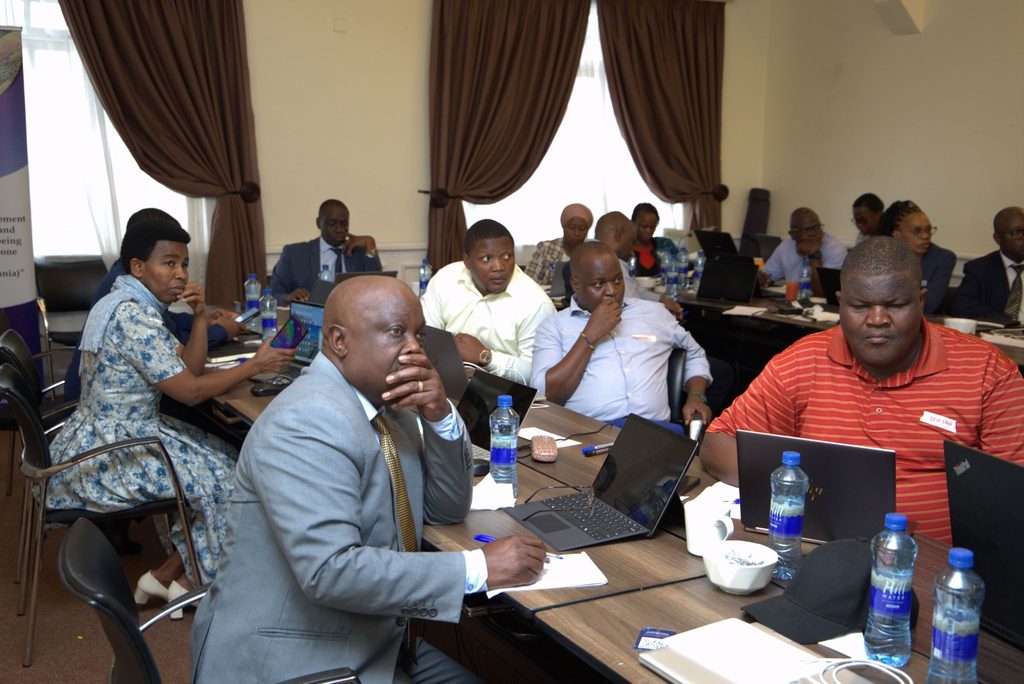
Importantly, this was the first Climate Finance Training in the modality of the African Continental Water Investment Programme that was conducted at transboundary river basin level.