
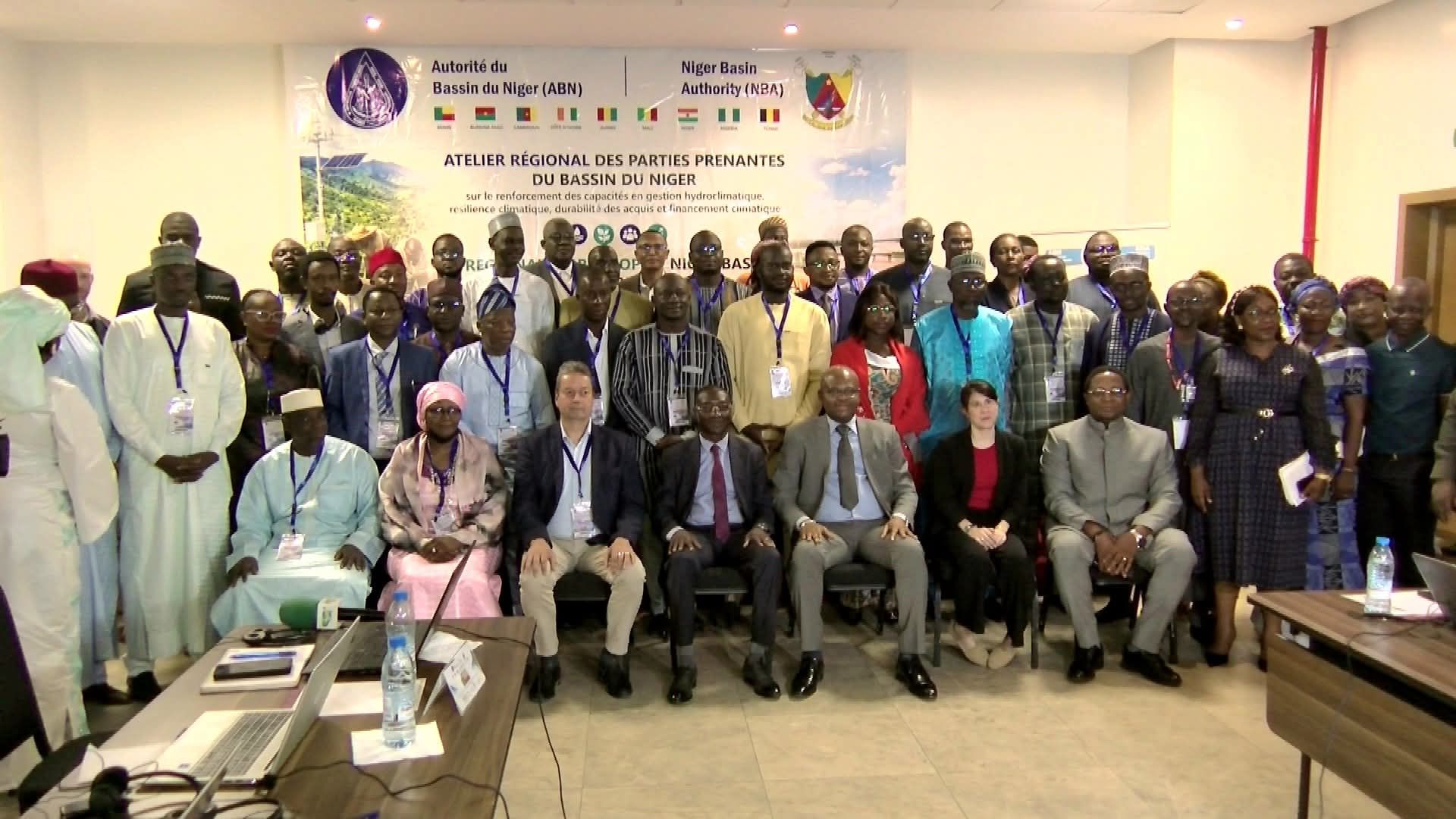
Strengthening climate-resilient water investment planning and access to climate finance was at the centre of a “Regional Capacity Building Workshop for Niger Basin Stakeholders in Hydroclimatic Management and Climate Resilience: Investment Planning, Climate Finance and Sustainability of Achievements” which took place from 22 to 25 June 2026, in Yaoundé, Cameroon. The workshop brought together representatives from Niger Basin countries, basin organisations, technical and financial partners, projects and programmes, natural resource users, journalists and policymakers.
The workshop focused on strengthening hydrometeorological information systems, building national and regional capacity to mobilise global climate finance, and improving participants’ ability to prepare projects that meet the requirements of the Green Climate Fund (GCF), Adaptation Fund and Global Environment Facility (GEF).
A key area of discussion was the link between climate-resilient water investment planning and project preparation. Participants explored how to develop stronger climate rationales, prepare investment programmes and move from project concepts towards proposals that are better positioned to attract financing.
GWPSA, through its Climate Resilience Programme, shared its experience in supporting countries to develop climate-resilient water investment programmes and project pipelines, strengthen project preparation capacity and facilitate access to climate finance. The engagement forms part of wider collaboration with continental and regional institutions to advance the objectives of the Continental Africa Water Investment Programme.
The workshop reinforced the importance of combining strong technical project design with institutional commitment, strategic partnerships and dedicated climate finance capacity. It also highlighted the need for the Niger Basin to package investment concepts into investment-ready programmes, strengthen data and evidence systems, and integrate financing considerations into planning from the outset.
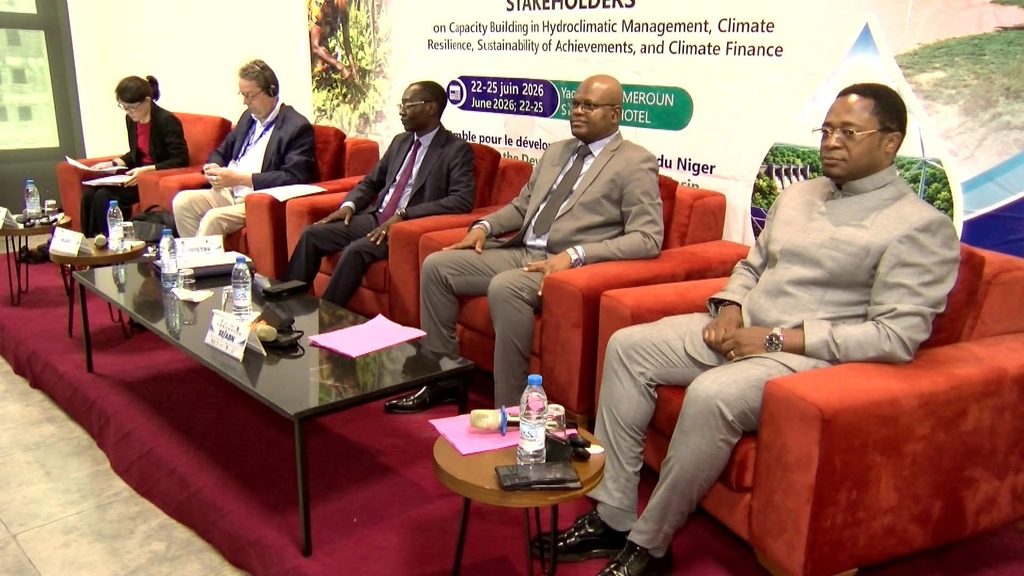
Specifically, the workshop helped achieve the following:
- Stakeholders were made aware of the state of water security and climate resilience, as well as the importance of hydro-climatic information and data in the Niger Basin;
- Participants received up-to-date knowledge of climate change and its impacts on water resources and associated ecosystems in the Niger Basin;
- Experts acquired the necessary information, knowledge and tools regarding planning and hydrometeorological information systems;
- Experts were able to develop investment programs for water security and climate resilience;
- Experts gained a good understanding of climate finance, as well as the procedures and modalities for preparing bankable projects and mobilizing resources from the Green Climate Fund (GCF), the Adaptation Fund, the Global Environment Facility, among others;
- Avenues for implementing measures to enhance the sustainability of investments in the basin were identified.
Background and Context
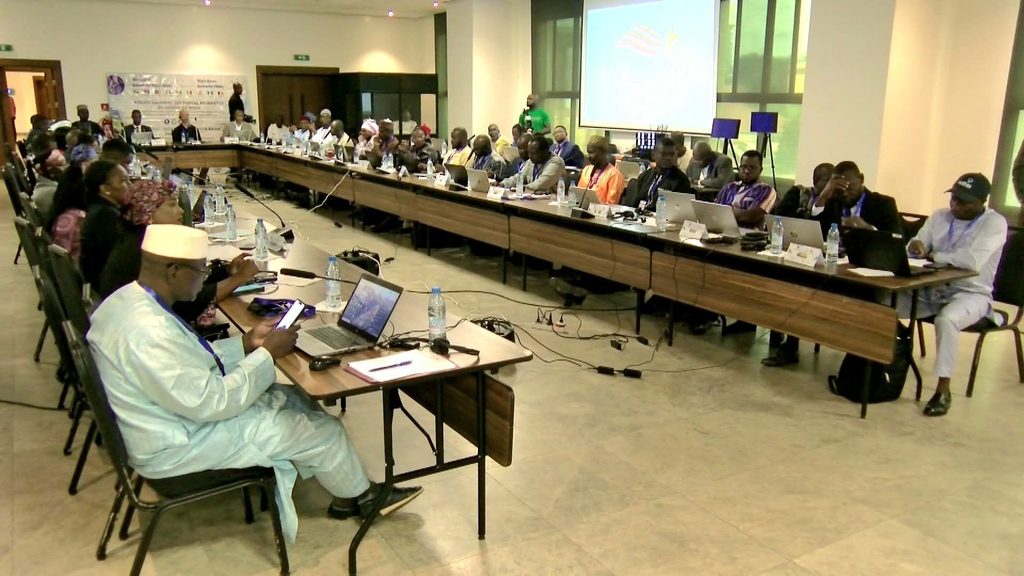
The Niger Basin Authority (NBA) is an intergovernmental organization established in October 1980 to replace the Niger River Commission created in November 1964. It comprises nine (9) member states sharing the Niger Basin, namely: Benin, Burkina Faso, Cameroon, Côte d’Ivoire, Guinea, Mali, Niger, Nigeria, and Chad.
The Niger River, the third longest river in Africa, drains a basin of more than 2.2 million km², including 1.5 million km² of active basin area, and supports over 180 million inhabitants. The Basin constitutes a strategic space for food, energy, water, and economic security across West and Central Africa. The Niger River and its tributaries sustain the livelihoods of millions of people through agriculture, fisheries, livestock production, inland navigation, and hydropower generation.
The Niger Basin’s development potential in terms of natural and economic resources remains largely underexploited, notably including:
(i) Hydrological and agricultural potential estimated at 4,496,210 hectares suitable for development, including 3,611,110 hectares of depressions and 865,100 hectares of floodplains. However, only 391,574 hectares, representing approximately 9% of the total potential, are currently developed and utilized;
(ii) Hydropower potential estimated at approximately 30,000 GWh. Nevertheless, existing hydropower installations currently generate about 7,000 GWh, representing only 24% of the total exploitable potential;
(iii) Forest resources estimated at around 9 million hectares of forest and savannah ecosystems, including gallery forests, wooded savannahs, and various woody species contributing to fuelwood production, timber supply, environmental protection, and biodiversity conservation;
(iv) the livestock sector, which also constitutes a major asset, with an estimated herd of 60,316,731 Tropical Livestock Units (TLU) recorded in 2005, mainly concentrated in Mali, Niger, Burkina Faso, Cameroon, and Nigeria. Water and grazing requirements frequently generate conflicts between farmers and pastoralists;
(v) Inland navigation, which remains seasonal under current river development conditions. Nevertheless, approximately 3,000 kilometers remain navigable for low-tonnage vessels; and (vi) Fisheries, tourism, and industry, which also represent promising sectors with significant development potential capable of strengthening resilience.
(vi) Nearly 200 billion cubic meters of water flow through the basin annually without being harnessed before discharging into the ocean, underscoring the urgent need to strengthen water mobilization and management infrastructure in order to meet growing population and economic demands.
These constraints generate significant socio-economic impacts, including declining agricultural productivity, food insecurity, reduced forestry, wildlife, and fisheries productivity, resulting in natural disasters, migration, resource-use conflicts, sedimentation of water bodies, shrinking arable land, and heightened vulnerability of populations.
To address all these challenges, Niger Basin Authority (NBA) mobilized support for the capacity building workshop from technical and financial partners for several projects and programs in the Niger Basin aimed at protecting and preserving natural resources, as well as strengthening the capacity and resilience of ecosystems and communities.
The NBA conducted the training with the support of NBA projects and programs and other institutions, including GWP Africa, GIZ Africa, Banque Ouest Africaine de Développement (BOAD) and International Union for Conservation of Nature (IUCN).